
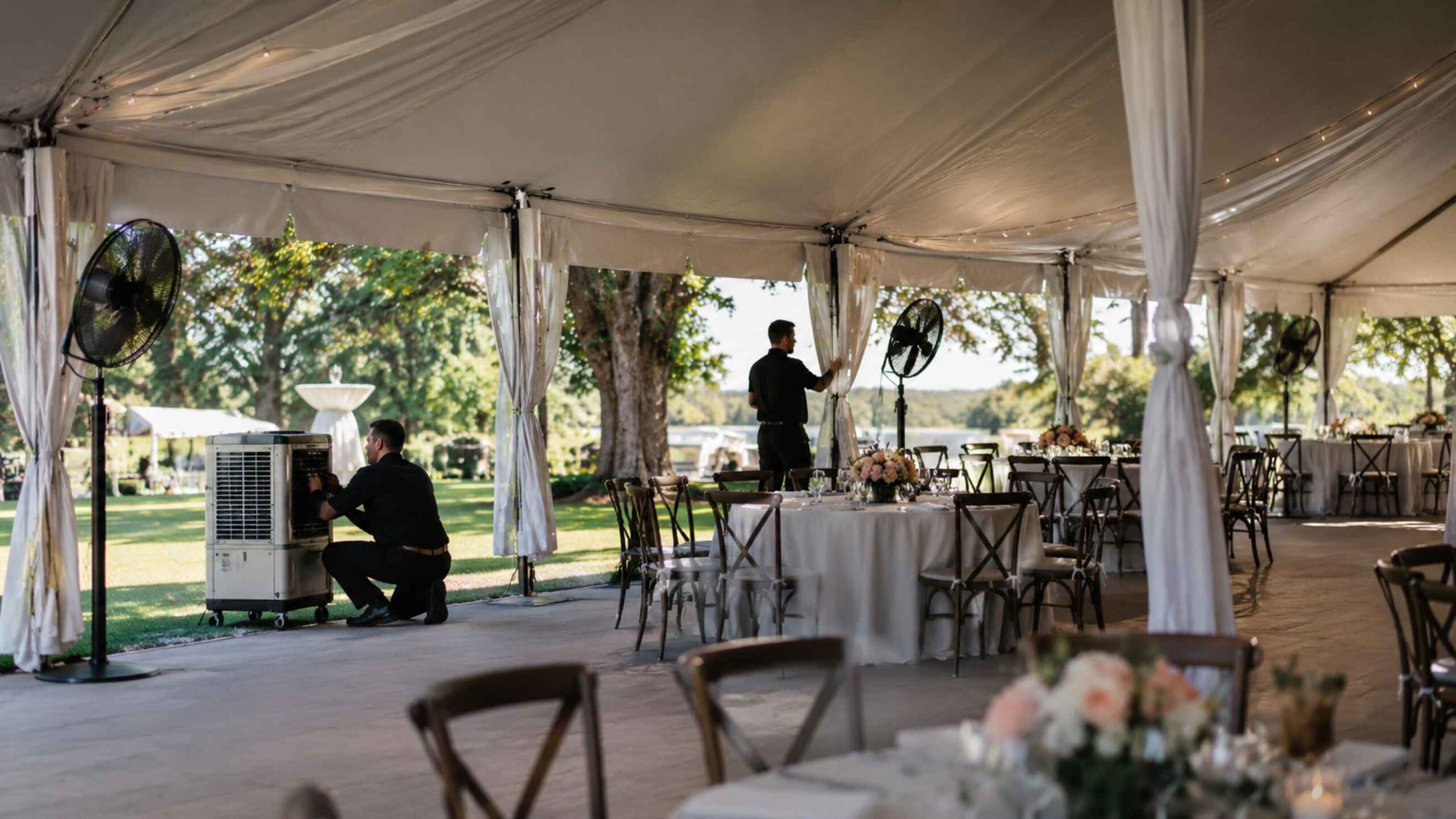
Outdoor gatherings often depend on temporary tents to provide shade, weather protection, and a defined space for guests. Weddings, community celebrations, corporate functions, and seasonal events may use structures ranging from open sided canopies to large enclosed marquees. Although tents provide useful protection from environmental conditions, their internal temperature and airflow require careful consideration during event preparation.
Weather conditions can change the atmosphere inside a tent considerably. Direct sunlight may increase heat buildup, particularly when sidewalls restrict natural ventilation. Cooler evenings can create different problems, including uncomfortable temperatures and condensation. Event organizers therefore need to assess the expected weather, guest numbers, tent layout, and available ventilation options rather than treating the structure as a substitute for a conventional building.
Guest comfort also depends on activities taking place beneath the tent. Large gatherings generate body heat, while catering equipment, lighting, and other installations may contribute additional warmth. A crowded tent can feel uncomfortable even when the outdoor temperature is moderate. Suitable ventilation arrangements should account for occupancy, equipment placement, and the need to maintain safe access to entrances and exits.
Natural Airflow and Tent Ventilation
Open sided tents generally allow more natural air movement than fully enclosed structures. Removing or opening suitable sidewalls can improve cross ventilation when weather conditions permit. The effectiveness of this approach depends on wind direction, surrounding buildings, and the tent’s configuration. Ventilation arrangements must also respect the manufacturer’s installation requirements and the structural restrictions associated with temporary shelters.
Mechanical ventilation may be useful when natural airflow is insufficient. Portable fans can help circulate air, although they do not necessarily reduce the actual air temperature. Fan placement should avoid blocking walkways or directing uncomfortable airflow toward seated guests. Electrical cables must be protected against moisture and accidental contact, with equipment selected according to its suitability for the operating environment.
Heat Management and Seasonal Conditions
Summer events require particular attention to solar heat exposure. Light colored tent coverings can reflect more sunlight than darker materials with otherwise similar properties, although actual performance depends on fabric construction and coatings. Shade alone does not guarantee comfortable conditions when humidity is high. Organizers may need additional airflow, drinking water access, and areas where guests can temporarily leave crowded spaces.
Cold weather events introduce different considerations. Portable heating equipment must be suitable for the specific tent and installed according to applicable fire and safety requirements. Fuel burning devices can produce carbon monoxide, an odorless and potentially fatal gas. Charcoal grills, unvented combustion appliances, and generators should never be treated as safe indoor heating options. Equipment selection and placement require appropriate professional assessment.
Layout, Occupancy, and Event Safety
Tent dimensions should be evaluated alongside the intended seating arrangement and expected number of guests. Dining tables, presentation equipment, catering stations, and circulation routes all occupy usable floor space. Crowded layouts can restrict airflow and make movement difficult. Occupancy limits and emergency exit provisions depend on the structure, local rules, and event configuration, making compliance checks an important part of planning.
Environmental monitoring can help staff recognize uncomfortable conditions before they affect the gathering. Temperature and humidity measurements provide useful information, but observations of guest comfort remain relevant. Weather forecasts should also be reviewed for strong winds, thunderstorms, and heavy rainfall. Temporary structures have defined operating limits, and unsafe weather may require evacuation or cancellation regardless of ventilation arrangements.
Comfortable outdoor events result from coordinating shelter design, weather preparation, and safe equipment use. Ventilation should be considered alongside crowd movement, electrical arrangements, and temperature control rather than as an isolated feature. Clear operating procedures allow event staff to respond when conditions change. With suitable planning, temporary tents can provide practical gathering spaces across a range of seasonal circumstances.