
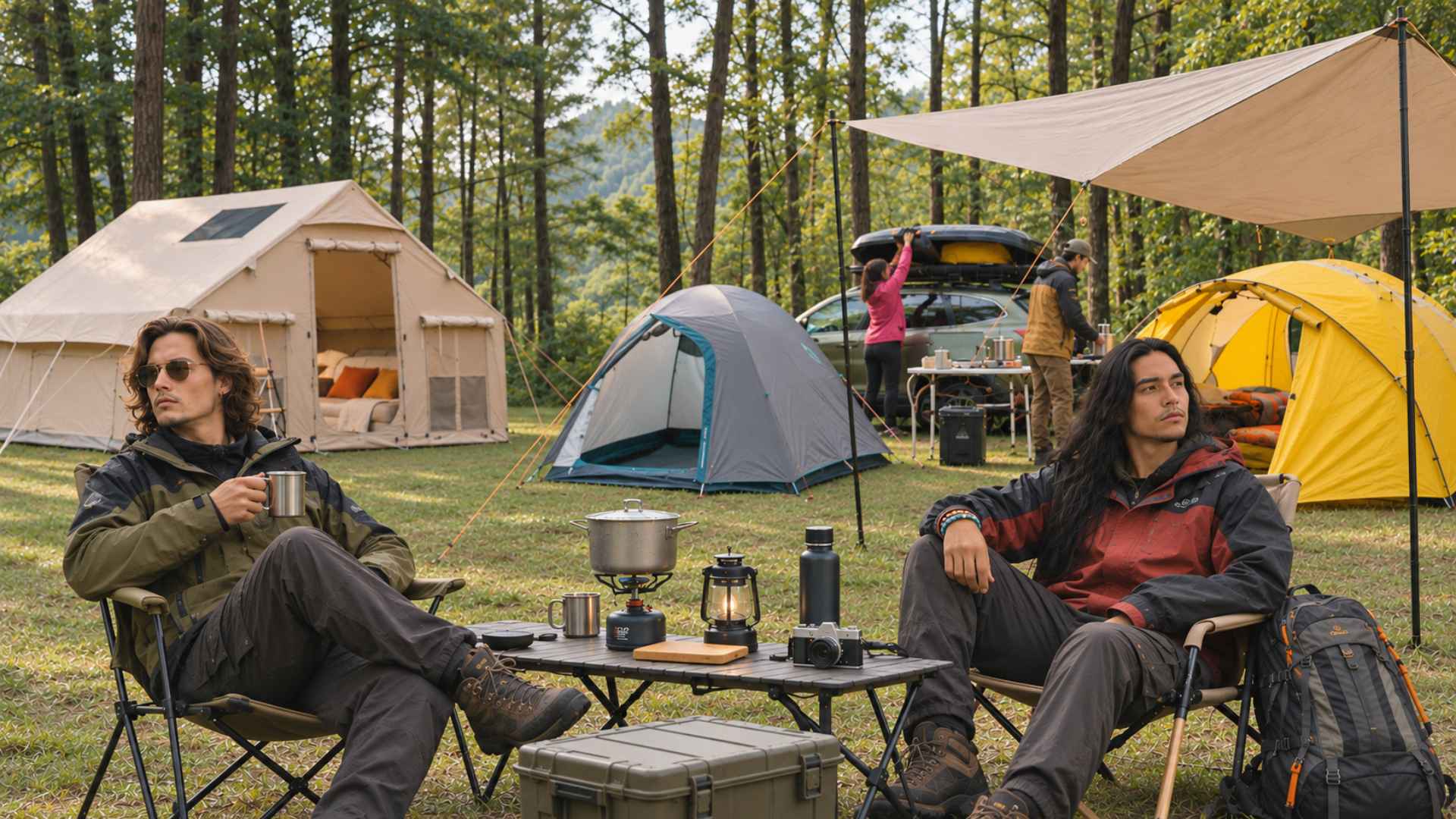
Camping shelters vary widely in structure, weight, weather resistance, and intended use. An overnight trip in a maintained campground places different demands on a tent than a multi day hike through exposed terrain. Cabin tents provide generous standing room, dome tents balance usable space with a relatively compact frame, and trekking pole shelters reduce carried weight by relying on poles that hikers already bring. No single design performs equally well in every setting, making the relationship between shelter construction and local conditions more important than appearance alone. Pack size and available ground space also affect whether a particular shelter is practical.
Weather protection also depends on the entire shelter system rather than the roof fabric alone. Tent poles, seams, floor construction, ventilation openings, stakes, and guy lines all affect performance. Rain may enter through an improperly positioned fly or damaged seam, while moisture from breathing and damp equipment can collect inside an otherwise waterproof tent. Examining these practical details helps explain why two shelters with similar advertised capacities may behave differently after several nights outdoors.
Tent Types and Seasonal Differences
Three season tents are generally intended for spring, summer, and autumn conditions. Many use a mesh inner body beneath a separate waterproof rainfly, providing insect protection and airflow while limiting direct exposure to rain. Freestanding dome models can stand with their poles inserted, although stakes and guy lines are still needed for dependable wind resistance. Tunnel tents often provide efficient interior space but depend more heavily on correct anchoring. For car camping, cabin style shelters prioritize headroom and floor area, usually at the cost of additional weight and bulk. Published sleeping capacities typically describe the number of occupants rather than generous space for mattresses, bags, and personal gear.
Four season tents are built for more severe conditions, particularly strong winds and accumulated snow. They commonly feature sturdier pole arrangements, less exposed mesh, and profiles designed to shed snow. The seasonal designation does not mean they are automatically better for summer trips; reduced airflow and heavier construction can make them less comfortable in warm weather. Tarps, bivy shelters, and lightweight single wall tents serve other needs. Tarps offer flexible overhead cover but generally provide less insect protection, while single wall designs save components yet can require careful condensation management.
Materials, Waterproof Ratings, and Ventilation
Most modern tent canopies use woven synthetic fabrics such as polyester or nylon. Waterproof coatings, often based on polyurethane or silicone, prevent liquid water from passing through the fabric under specified conditions. Manufacturers may express water resistance as a hydrostatic head rating in millimeters. A 1,500 mm rating means the tested material resisted pressure equivalent to a 1.5 meter column of water before leakage under the test conditions. Higher numbers indicate greater resistance in that test, but do not independently establish overall tent quality. Stitching, seam treatment, fabric aging, and pitch tension also influence real world performance. Ratings from different manufacturers may involve different test methods, so direct comparisons require caution.
Floors often need greater resistance to pressure than rainflies because occupants and equipment press the material against wet ground. Separate groundsheet footprints help limit abrasion, but a footprint extending beyond the tent floor can collect runoff beneath the shelter. Ventilation deserves equal attention. Warm, humid air from occupants can condense when it contacts a cooler surface, especially during calm nights. Mesh panels, roof vents, and a gap between the inner tent and rainfly allow some moisture to escape. Condensation is therefore not always evidence of a leaking fabric or a defective waterproof coating.
Site Selection, Shelter Setup, and Safety
Campsite location can determine whether a well designed shelter remains dry and stable. Established campsites and durable surfaces such as gravel or bare soil help reduce damage to vegetation. Leave No Trace guidance generally recommends camping at least 200 feet, approximately 61 meters, from lakes and streams where local rules permit. Low hollows may collect rainwater, and dry streambeds can become hazardous during sudden runoff. Campers should also inspect overhead branches, nearby slopes, and exposure to prevailing winds before pitching a tent.
Correct setup distributes stress across the shelter rather than concentrating it at a few attachment points. Stakes should suit the ground: ordinary stakes can hold in firm soil, while sand or snow may need broader anchors or buried deadman anchors. Guy lines help maintain the intended tent shape and reduce uncontrolled movement during gusts. A taut rainfly should remain separated from the inner canopy when the design requires it. After rainfall, campers can check for pooled water, loosened anchors, and soil movement without altering the campsite through trenches or unnecessary digging.
Fire and air quality hazards require separate precautions. Fuel burning stoves, heaters, and charcoal equipment can produce carbon monoxide, an odorless gas capable of causing fatal poisoning. Such devices should never be used inside a tent or enclosed shelter, even with doors or windows partially open. Cooking belongs outdoors, away from flammable tent fabric and dry vegetation. When breaking camp, drying the shelter before long term storage helps limit mildew and coating deterioration. Zippers, pole joints, and seam tape should be inspected before the next trip because small failures are easier to repair at home. Suitable equipment, careful placement, and routine maintenance together determine how reliably a shelter performs across repeated trips.