
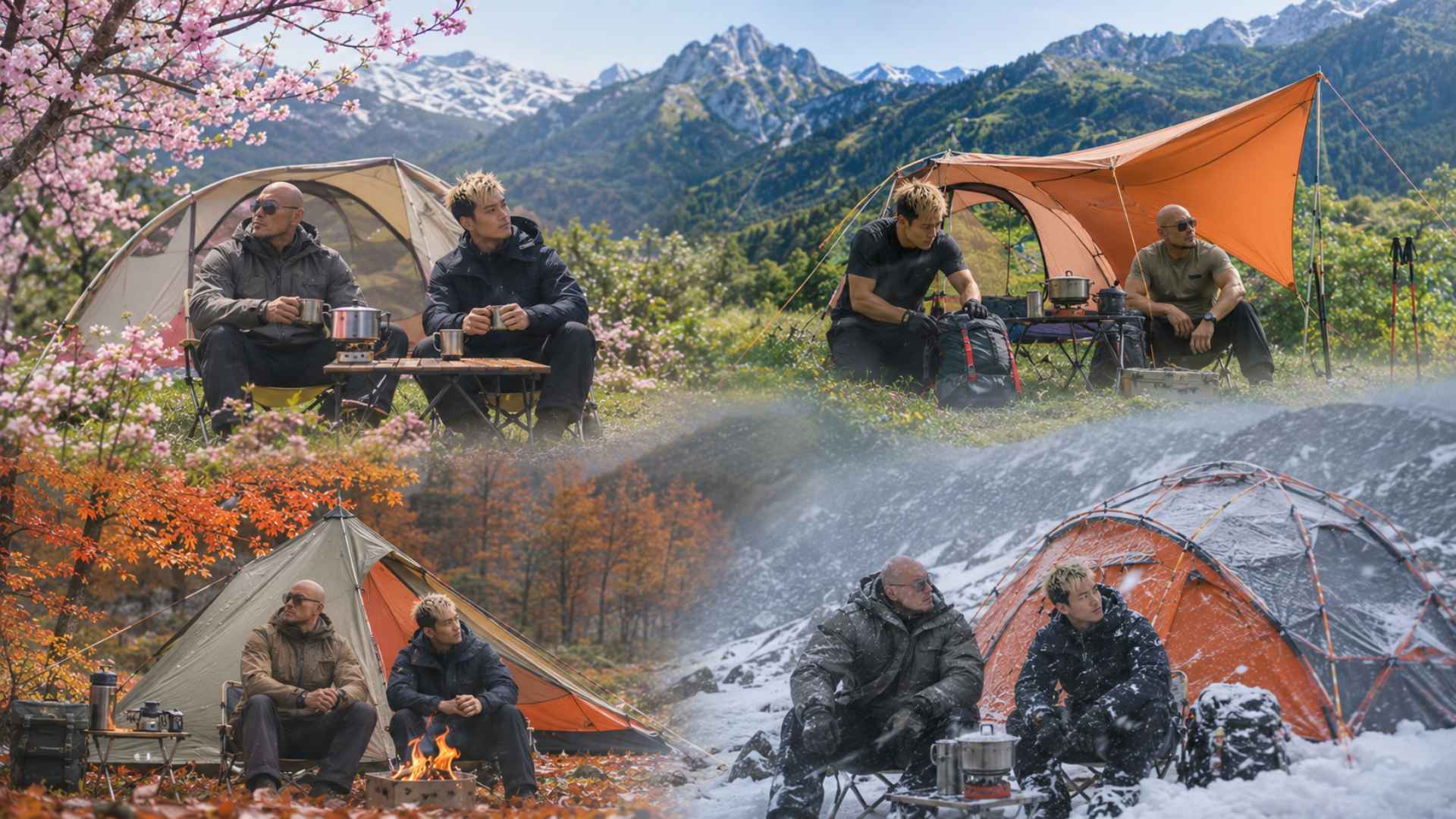
Winter campsites expose shelters to conditions that ordinary fair weather tents may not tolerate for long. Snow can accumulate on a roof, strong gusts can strain poles and anchors, and freezing temperatures can turn interior moisture into frost. Four season camping shelters are built primarily to cope with these mechanical and environmental stresses. The designation does not mean that every model can withstand every storm. It describes intended use rather than a universal certification for wind speed or snow weight. Performance depends on frame design, fabric condition, correct assembly, and the specific conditions encountered at the campsite.
Shelter performance also depends on equipment beyond the tent itself. Ground protection, suitable anchors, ventilation openings, and a properly insulated sleeping system all affect comfort and safety. Four season designs generally use more substantial pole arrangements, fewer exposed mesh panels, and weather resistant outer walls than typical three season tents. Those features provide greater protection in winter and exposed terrain, although they often increase weight and reduce airflow during warm weather. Evaluating each component separately helps clarify what the shelter can realistically provide.
Frame Geometry and Fabric Protection
Pole geometry determines how a tent transfers wind pressure and snow loads through its structure. Many winter tents use low, rounded profiles with several pole intersections to support the canopy and limit broad, unsupported fabric panels. Reinforced attachment points, properly tensioned guylines, and secure anchors help distribute forces instead of concentrating them at individual seams. Freestanding frames maintain their basic shape without stakes, but they still require reliable anchoring in strong wind. No pole configuration removes the need to monitor snow accumulation during a storm.
Weather resistance also involves the fabric, seams, and ground level details. Manufacturers commonly describe waterproof performance with a hydrostatic head rating measured in millimeters of water pressure. For example, a rating of 1,500 millimeters represents resistance to the pressure of a 1.5 meter water column under test conditions, not a prediction of rainfall depth. Seam construction, coating wear, and fabric tension can change real world results. Floors face abrasion and pressure from occupants, while full coverage rainflies and protected entrances limit wind driven precipitation. Each element needs to function together, especially where fabric sections meet doors, vents, and ground level seams.
Condensation, Ventilation, and Thermal Comfort
Breathing, perspiration, damp clothing, and wet ground release moisture into an enclosed tent. When humid interior air reaches a sufficiently cold surface, water vapor condenses or freezes. This can occur even when the outer fabric is completely waterproof. Double wall shelters separate occupants from the outer rainfly, helping reduce direct contact with condensation. Single wall shelters save material and weight but require careful airflow management because moisture can form on the same surface that faces the sleeping area. Neither construction type eliminates condensation in every climate. Keeping the inner wall from touching the rainfly also helps prevent moisture transfer.
Ventilation must balance moisture removal with protection from blowing snow. High vents allow warm, humid air to escape, while lower openings can admit replacement air when conditions permit. Campers should keep designed vents clear rather than sealing the shelter completely. Warmth comes mainly from suitable clothing, sleeping bags, and insulated pads, not from the tent fabric. Sleeping pad R value measures resistance to heat flow; pads rated 5.5 or higher are generally associated with very cold conditions. When two sleeping pads are stacked, their R values are additive. A tent can block wind without acting as a heated or well insulated room.
Placement, Anchoring, and Shelter Care
Campsite selection is part of the shelter system. Level ground with suitable drainage reduces water accumulation during thawing or heavy rain. In snowy terrain, a firm, prepared platform helps support the tent and creates a more even sleeping surface. Sites beneath unstable branches, exposed ridgelines, or slopes threatened by avalanches introduce hazards that fabric strength cannot solve. Wind direction matters when positioning entrances, although surrounding terrain can redirect gusts unexpectedly. Weather forecasts, local restrictions, and escape routes should be reviewed before committing to a remote winter location. Snow covered ground can conceal rocks, holes, and other obstacles.
Anchoring methods must match the surface. Conventional stakes can work in firm soil but may pull free from loose snow. Purpose built snow stakes, buried anchors, or securely placed natural anchors can provide better holding power when installed correctly. Guylines should be tensioned according to the tent manufacturer’s instructions, then checked as temperature, wind, and snow conditions change. Snow should be cleared from the roof and around critical vents before excessive accumulation develops. Buried anchors must also be checked for movement as surrounding snow changes. Any adjustment in severe weather must be weighed against the danger of leaving shelter.
Routine inspection extends the practical life of a winter tent. Before departure, check poles for cracks, inspect seams and zippers, and confirm that the complete anchor kit is present. After a trip, remove dirt, dry the tent thoroughly, and store it away from prolonged moisture and excessive heat. Damaged components should be repaired or replaced before the next trip. Fuel burning stoves, heaters, and lanterns must not be operated inside tents or enclosed vestibules because carbon monoxide can accumulate without a detectable smell. Four season shelter reliability ultimately comes from sound construction, suitable supporting equipment, careful placement, and ongoing attention to changing weather.